OpenStreetMap logo OpenStreetMap

Users' Diaries

Recent diary entries

My Growth Journey in the ESA validation Fellowship

When I was first selected for this fellowship, I felt a mix of excitement and nerves. My first major assignment was Hot Tasking Manager Project #16505, and I’ll be honest: it was a wake-up call. Initially, the tasks felt daunting. I quickly realized that while I knew how to map, I hadn’t yet mastered the advanced features required to validate data efficiently.

My workflow was slow, and I felt I was missing the technical “bridge” needed to ensure the high-quality data that a project of this scale demands. The breakthrough came through the mentorship of our facilitators. They introduced us to a suite of professional techniques and GIS tools that changed everything. Specifically, learning how to leverage advanced filters and JOSM shortcuts was a game-changer.

These weren’t just “tips” they were the keys to unlocking a much more efficient and precise validation process. By integrating these tools into my daily workflow, my technical hurdles disappeared. What once felt overwhelming now feels intuitive. This fellowship has done more than just teach me how to click buttons; it has provided me with:

  1. Technical Proficiency: A deep understanding of GIS features I previously overlooked.
  2. Confidence: The ability to validate complex data with precision.
  3. Professional Growth: A clearer perspective on the standards required in the GIS profession.

I am walking away from this experience with full confidence in my skills and a renewed passion for contributing high-quality data to the OpenStreetMap community

Posted by FRANCIS NDIRITU on 8 January 2026 in English. Last updated on 10 January 2026.

Introduction

The ESA Hub Fellowship was a deeply enriching and practical learning experience that significantly strengthened my skills in geospatial data production, validation, and humanitarian mapping. From the beginning, the fellowship introduced me to the mission of ESA Hub and the critical role that open geospatial data plays in disaster response, resilience building, and inclusive decision-making. I developed a strong understanding of the OpenStreetMap (OSM) ecosystem, humanitarian mapping principles, and the workflows of the HOT Tasking Manager, which laid a solid foundation for meaningful contributions to real-world projects.

Throughout the fellowship, I gained extensive hands-on experience in mapping and contributing to several humanitarian and disaster response projects. Using tools such as iD Editor and JOSM, I digitized key features including buildings, roads, waterways, and other critical infrastructure from high-resolution satellite imagery. I actively contributed to projects supporting humanitarian response in Sudan, Mapping for disaster resilience in Elgeyo Marakwet, and emergency response efforts for Hurricane Melissa in Jamaica, among many other projects. These contributions helped improve the availability and quality of geospatial data in under-mapped and disaster-affected regions, supporting responders and planners on the ground.

See full entry

As of December 13th, 2025, Swift and Portal interlockings have been renamed to “Old Swift” and “Old Portal”. Tracks and signals have also been renamed (2 turned into 22 and 3 turned into 33). I’ve already put in the edits.

Track diagram of Old Swift and Old Portal from NYW1-23-b

OSM: osm.org/#map=16/40.75308/-74.09527

Openrailwaymap: https://openrailwaymap.org/?style=standard&lat=40.7532&lon=-74.1037&zoom=15

NYW1-23-b: https://archive.org/details/AMTK-NEC-employee-timetable-supplemental-bulletin-20251213-NYW1-23-b

Current NEC ETT: Amtrak - Northeast Corridor Employee Timetable 2025-11-03, Special Instructions

As always, I put all bulletins and new employee timetables in this list on Archive.org

Amtrak’s FOIA office is now really fast. I can get bulletins the same day they are requested. Back in August they were much slower but now that I’m doing these every month they are on top of it.

Location: Kearny, Hudson County, New Jersey, 07032, United States

Revisei recentemente áreas da Serra fortemente afetadas pelas chuvas da enchente de 2024. Um trecho da BR-470 na região da Ponte dos Arcos sofreu múltiplos deslizamentos e, 19 meses depois, ainda opera em sistema de comboio (sentido único reversível com escolta), com longas esperas, tornando várias estradas vizinhas rotas alternativas importantes.

Ao refazer o levantamento ali, notei uma quantidade significativa de nova sinalização de advertência, principalmente para risco de desmoronamentos. Como o OsmAnd agora oferece suporte básico à etiqueta hazard, passei a mapear esses riscos quando há placas de advertência no local, pois tendem a permanecer relevantes por muito tempo.

Pensando na utilidade prática para navegação, especialmente à noite e sob chuva, decidi focar o mapeamento de hazard apenas em dois riscos: desmoronamentos ( hazard=landslide, que podem influenciar a escolha da rota quando há chuva intensa) e animais ( hazard=animal_crossing, uma fonte comum de acidentes). Outros riscos sinalizados são frequentes, redundantes ou inferíveis pela geometria da via e tendem mais a poluir avisos de navegação do que a ajudar.

Notei que a RSC-287 ainda tem 5 pequenos desvios não totalmente recuperados, quase todos mal sinalizados e com acidentes fatais recentes, mas não vi novas placas para risco de alagamento ( hazard=flooding ). Por isso, sigo usando apenas flood_prone=yes em vias com histórico recorrente de alagamento após chuva intensa, com base em notícias (infelizmente raramente precisas) e na análise de imagens históricas do Sentinel-2, adotando o critério sugerido no wiki de a via permanecer submersa por mais de 0,1% do tempo (8h por ano, ou 1 dia a cada 3 anos).

Location: Veranópolis, Região Geográfica Imediata de Bento Gonçalves, Região Geográfica Intermediária de Caxias do Sul, Rio Grande do Sul, Região Sul, Brasil

During the fellowship, I learned how to validate more effectively, especially by using filters, search functions, and setting up map paint styles. I became better at identifying issues, mapping across different countries, and validating data from other regions. This helped me understand mapping more deeply, including the different shapes of buildings across countries. I also gained a stronger grasp of quality standards and grew more comfortable using JOSM shortcuts. For example, while validating building footprints in Africa and later in Asia like Japan, North and South America, I noticed differences in building construction styles and settlement patterns. By applying filters and map paint styles, I was able to quickly identify inconsistencies such as overlapping polygons or missing tags and correct them. This experience not only improved my technical validation skills but also gave me a broader perspective on how mapping standards can be applied across diverse contexts.

During my validation mapping in Japan, I encountered a task where the same area had been mapped using two different imagery sources of Bing and Esri. This created alignment issues and inconsistencies in the data. Through the fellowship, I learned how to handle imagery offsets, switch between imagery layers and use search tools to trace a particular mapper’s edits. By applying these skills, I was able to identify the discrepancies, adjust the imagery and improve the overall quality of the map. This experience was particularly meaningful because it showed me how technical validation techniques like managing imagery sources and targeting specific edits can directly enhance data accuracy. It was a proud moment to see how my improved skills contributed to cleaner, more reliable mapping outputs.

See full entry

No dia 3 de janeiro de 2026 o grupo informal OSM Braga organizou um pequeno encontro e mapathon. Em 2024 chegámos a fazer vários encontros (físicos e online) entre maio e agosto, mas em 2025 estivemos apenas em contacto virtual através do nosso grupo no Telegram, e ao aproximar-se o final do ano, o o_andras lançou o desafio de nos voltarmos a encontrar, iniciando e coordenando a conversa que veio a resultar neste evento. Já não deu para ser em 2025, mas em contrapartida inaugurámos 2026 em grande estilo — batemos o nosso recorde de participantes, passando de 5 para 9 (poucos, mas bons! 😁)

Participantes do encontro

Além de mapeadores da cidade e arredores, juntaram-se também membros da comunidade vindos do Porto e até Lisboa (graças ao apoio da Wikimédia Portugal que se ofereceu para cobrir despesas de deslocação dos participantes). Também tivemos uma diversidade interessante de níveis de experiência, desde mapeadores experientes até curiosos que nunca tinham editado o OSM.

See full entry

Location: Braga (São Vicente), Real, Braga, Portugal

ESQUEMAS DE ETIQUETAS PARA MAPEAMENTO TEMÁTICO COM OPENSTREETMAP PUBLICADOS EM 2025


[English below]  

A empresa IVIDES DATA, associada ao Instituto Virtual para o Desenvolvimento Sustentável - IVIDES.org, publicou em 2025 quatro esquemas de etiquetas para mapeamento temático com OpenStreetMap - vilas rurais, acesso a praias, toponímia e mineração. Os documentos são resultantes de novas pesquisas conjuntas e sessões de treinamento realizados com três instituições de ensino superior brasileiras: Universidade do Vale do São Francisco - Univasf, Universidade Federal de Minas Gerais - UFMG e Universidade Federal do Rio de Janeiro - UFRJ.


Espera-se que o material gerado seja adotado em mapeamentos colaborativos que não são tão frequentes, mas que possuem importância estratégica para o Brasil e os demais países. Um dos guias está em inglês e fará parte de publicação internacional sobre acesso a praias (uma iniciativa franco-brasileira), a ser lançada ainda em 2026.


[PT] Gabarito geral para o mapeamento de vilas rurais com OpenStreetMap


[EN] Collaborative mapping of beach access with OpenStreetMap


[PT] Esquema de etiquetas no OpenStreetMap - Toponímia


[PT] Esquema de etiquetas no OpenStreetMap - Mineração


A empresa tem registro formal no Brasil (CNPJ 56.127.866/0001-12) e está aberta a novas parcerias. Contatos podem ser realizados pelo e-mail ivides [at] ivides.org.

See full entry

Posted by Sunni24 on 6 January 2026 in German (Deutsch).

Sv01_Banner

Für das Mappen komplexer räumlicher Strukturen sind 360° Street View Bilder eine großartige Unterstützung. Schnelligkeit und Vollständigkeit der Datenerfassung sind die größten Pluspunkte. Einzig die hohen Kosten waren für mich abschreckend.

Das ändert sich derzeit. Die erste und zweite Generation der Consumer 360°-Kameras kommt nun zu sehr günstigen Preisen in den Gebrauchtwarenhandel. Die Samsung Gear 360 Modell 2017 ist z.B. ab 20€ zu haben. Da musste ich zugreifen :-)

Kamerahalterung fürs Fahrrad

Ziel war, so schnell wie möglich Testfahrten machen zu können. Es kamen daher nur Komponenten in Frage, die im eigenen Lager oder beim Händler um die Ecke vorrätig waren. Das Design spielte keine Rolle, es sollte nur beim Fahren nicht stören und bei Nichtgebrauch rasch demontierbar sein.

Die Konstruktion zeigen die folgenden Bilder:

See full entry

Location: Katastralgemeinde Liebenau, Liebenau, Graz, Steiermark, 8041, Österreich

contributors

may I point you to our online mapathon tomorrow night?

Missing Maps London Online: Zoom

6th January 19:00 – 21:15 (Europe/London)

The early month meeting is focused on new mappers with breakout rooms for iD, JOSM and mappers who want to learn about validation usually with JOSM. Next one is 6 January Get your free ticket .

This Mapathon will take place online! If you wish to attend, then please get a ticket and details for joining will be shared with you.

This event is London based in name only! Since we have moved to virtual events we have been getting attendees from all over the world - we heartily welcome this!

Schedule 19:00: Introduction to Missing Maps and practical information

19:15: iD Training / JOSM Training / Validator Training

21:00: Closing discussion and potential talks

Mapy a zobrazovací nástroje

Mapovací nástroje

Mapovací zdroje a manuály

Jiné zajímavé odkazy

Location: Nižbor, okres Beroun, Středočeský kraj, Střední Čechy, 267 05, Česko

Mismatched descriptions: a Categoria

Aqui e graças a uma extensão que instalei no Edge (que já não sei onde fui desencantar), que me permite ver as categorias ocultas das páginas da wiki e descobri mais coisas pra fazer. No caso mais ou menos simples, mas dentro de uma estrutura hiper mega complicada (claro); fui aos confins da por assim dizer wikidata da wiki do OSM (coisa que desconhecia… e que por ter feito esta empreitada manualmente através dos artigos da wiki nem posso dar link aqui)… E pôr as descrições dos artigos a coincidir com a descrição na wikidata porque pelos vistos isso é uma coisa. Divertido q.b., e assim também traduzi e completei algumas páginas.

Depois de cerca de 20 páginas aniquilidas…

Fontes de dados em Portugal: a tabela

Também não sei como descobri esta página incrível. Pus-me a ver se os links funcionam numa tabela infinita de links para todas as câmaras municipais do país que providenciam dados geográficos. Muito pouco claro se é possível usar esses dados no OSM, mesmo que esses mesmos sites usem os dados OSM. Assim rasurei um monte de links mortos (não, não apaguei)…

Pelo meio aprendi como fazer um template e criei um aviso na página… Porque demorou mesmo muito tempo e eu nem sequer cheguei a meio.

Depois vi páginas de perfil de utilizadores da wiki para perceber como é que hei-de criar uma para mim. Mais templates.

E assim porque há tanto código diferente em todas estas plataformas OSM related e por facilidade mental também me pus meio que a remar contra a corrente e a usar HTML aqui e ali?… Obrigada myspace!

Vou deixar aqui estes links, posso precisar deles:

Posted by metapod on 3 January 2026 in Portuguese (Português).

Hoje passei uma dúzia (!) de horas a tentar resolver a página “Pt:Map features”… E… não consegui fazer nada de jeito (acho até que piorei a situação). Fiquei cansada de ver “aerialways” (o primeiro item da lista) o dia todo… Terrível!! Foi esta página que me entreteve a necessidade de perceber alguma coisa que fosse.

Esta wikipédia tem um problema grave com os templates. Entre traduzir, fazer o cross referencing, aprender nem sei que código… E subpáginas??? E erros de JSON?! e tabelas a dar erros com letras a vermelho….!! E… Secções de artigos separadas aleatoriamente por partes de templates sem nexo nenhum…

Uf. Seria muito mais fácil se realmente se usassem as tabelas que vêm com as páginas de template, assim a tradução seria praticamente automática (já quase que é, na verdade) e seria mais fácil editar alguma coisa assim à primeira. Hei-de voltar a ocupar-me com esta tarefa hiper mega complicada.

Fora isso estive a ver o que mais podia sintetizar ou traduzir nas várias Pt:isto ou aquilo, e assim fiz num nível muito básico. Acabei a ver propostas, e vieram-me algumas à ideia.

Muito trabalho a fazer. O que é.. bom! E pronto, amanhã será outra coisa qualquer.

Posted by harisont on 3 January 2026 in English.

I’m finally back to mapping after an unplanned 4-month break.

I usually have a casual but relatively consistent approach to mapping: every time I have to go somewhere new and my exact destination isn’t in OSM, I add it once I arrive; if the opening times of a place I visit regularly change, I update them, and so on. As of late, though, this just hasn’t happened. Either map data has become good enough for my everyday needs in Gothenburg, Sweden or I’ve been paying less attention than usual. Probably a little bit of both.

Right now, on the other hand, I’m visiting my family in Agrigento, Italy, and mapping is the perfect holiday activity for me: it can (to some extent) be done without a computer, which is a nice change of pace, and it gives me an excuse to be outisde, enjoy the warm weather and take all the side streets I haven’t explored before or have forgotten about. Plus, there’s so much to do here compared to Gothenburg!

Today I simply went for a walk and answered a bunchn of quick questions on StreetComplete. In the next few days, I want to try something more systematic, like updating information about what’s happening inside each of the buildings of the main street: a lot has changed since I last came. I’m also pondering trying to get one or two family members involved; we’ll see.

Location: Bibirria, Agrigento, Sicily, 92100, Italy
Posted by Thebro7her on 2 January 2026 in Italian (Italiano).

Buonasera a tutti!

Sto modificando da un pò di tempo la mappa nella zona dove risiedo e che, per l’appunto, conosco meglio. Avevo infatti notato che nelle zone del mio quartiere mancavano gli edifici e i relativi negozi erano alquanto assenti, e mancavano intere vie, anche importanti oppure avevano errati sensi di marcia. E oltre a questo sto cercando di aggiornare i nodi della rete ferroviaria nazionale con le relative caratteristiche mancanti(sito web ufficiale, presenza di wifi, collegamento a wikimedia commons, codice UIC……). Proseguirò a modificare la mappa nei prossimi giorni, dato che c’è tantissimo da fare sono graditi consigli, suggerimenti e correzioni da altri mapper.

Posted by fghj753 on 2 January 2026 in English. Last updated on 7 January 2026.

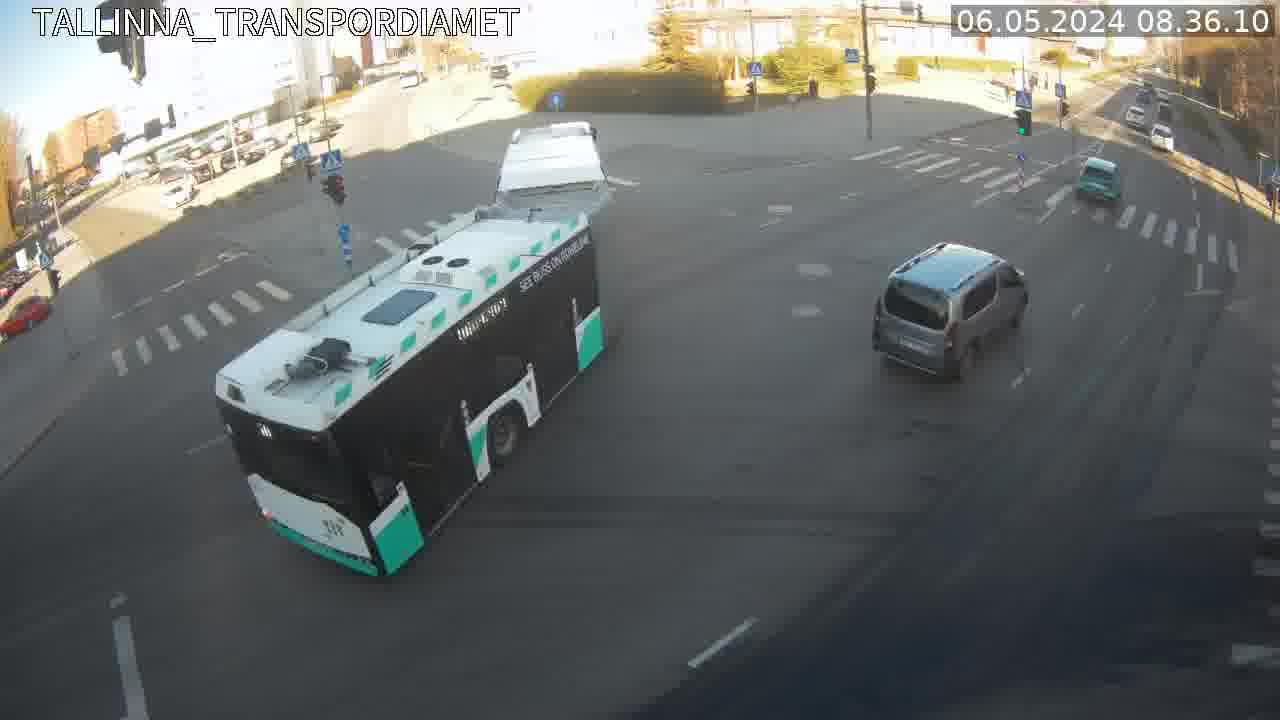
Started this year with a weekend mapping project: locate and map public traffic camera feeds from city’s website. Day 2 and I’m halfway done, about 130 out of ca 260 have live feed links now. Roughly 5 of them weren’t previously mapped at all.

Purpose of this diary entry is to save the checker scipt in publicly accessible place for unlikely reuse. Script scrapes all possible camera IDs and cross references them against already mapped feeds via overpass.

EDIT: Project was mostly completed as of 2026-01-02, changeset/176761784 outlines up to 10 missing cameras yet to be mapped.

sample img

Overpass query to get already mapped ones:

[out:json][timeout:25];
area(id:3600079510)->.searchArea;
node["contact:webcam"~ristm](area.searchArea);
out geom;

See full entry

Location: Pelguranna, Põhja-Tallinna linnaosa, Tallinn, Harju County, Estonia

Thumbnail of the video at commons

Link to the Time Lapse Video of Amaravati (2015-2025)

Time lapse video of OSM has been of interest to me for more than 10 years. I learned to use QGIS in 2015 and made a physical map of Andhra Pradesh in my first attempt. Learning QGIS with its myriad menus and concepts of GIS was daunting to venture further during my infrequent attempts. Finally I made my first time lapse video after 10 years. I found OSM contributor radiotrefoil's diary entry on the subject posted about an year back very helpful. Still I had to struggle to make a good video for OSM edits for Amaravati, the green field capital of bifurcated Andhra Pradesh, a province of India. This is an attempt to document my learnings and make it easier for others.

Choosing an area of interest and fetching data

See full entry

Location: Byrasandra, Bengaluru South City Corporation, Bengaluru, Bangalore South, Bengaluru Urban, Karnataka, India
Posted by MoX on 1 January 2026 in German (Deutsch). Last updated on 2 January 2026.

Schleswig Holstein

ALKIS Flur-, Gemarkungsgrenzen

ALKIS Flurstücke