OpenStreetMap logo OpenStreetMap

Users' Diaries

Recent diary entries

I’d like to share a simple method I’ve devised to map unfamiliar areas outdoors. Suppose you’d like create a GPX track of a park under the following constraints:

  • GPS data is inherently inaccurate, so you’d like to walk each path exactly twice to improve accuracy.
  • You’d like to finish an the exact point you started.
  • You’re in the field, so you want to keep things simple and not use something too complicated.

Since the diary does not allow posting GIFs, the full post is in the community forum.

Posted by Archit Rathod on 25 August 2025 in English. Last updated on 31 August 2025.

🎉 GSoC 2025 Final: Temporary Road Closures Database and API

Google Summer of Code 2025 • OpenStreetMap Foundation • Archit Rathod

After 15 weeks of intensive development, I’m thrilled to announce the successful completion of my Google Summer of Code 2025 project: Temporary Road Closures Database and API for the OpenStreetMap Foundation! 🎯

🚀 Live Demo - Try It Now!

Frontend: https://closures.osm.ch/
Backend API: https://api.closures.osm.ch/
GitHub: https://github.com/Archit1706/temporary-road-closures
GSoC Project: summerofcode.withgoogle.com

🎯 Problem Solved

OSM provides excellent static map data, but temporary road closures (construction, accidents, events) aren’t captured quickly enough for navigation apps. This project creates an open platform where communities can report closures in real-time and navigation apps can calculate closure-aware routes.

What We Built

Complete Backend System

  • FastAPI + PostgreSQL + PostGIS - Production-ready API with 25+ endpoints
  • OpenLR integration - Universal location referencing for cross-platform compatibility
  • OAuth2 + JWT authentication - Secure user management with Google/GitHub login
  • Advanced spatial queries - Bounding box searches, proximity filtering, route analysis

Modern Frontend Application

  • Next.js 15 + TypeScript - Interactive web interface with mobile optimization
  • Leaflet maps - Real-time closure visualization with OpenStreetMap tiles
  • Multi-step reporting - Guided forms for accurate closure submission
  • Demo mode - Full functionality without registration for immediate testing

Closure-Aware Routing Innovation

  • Valhalla API integration - Calculate routes that avoid relevant closures
  • Transportation filtering - Car, bicycle, and pedestrian-specific closure relevance
  • Route comparison - Direct vs. closure-aware route analysis
  • Real-time optimization - Live route calculation considering current conditions

🌟 Key Innovations

OpenLR Integration

See full entry

Location: Near West Side, Chicago, West Chicago Township, Cook County, Illinois, United States

Mały wąwóz

( kilka - kilkadziesiąt metrów, bez wody / PL: 1-2.5 m szer. i mniej)) osm.wiki/Pl:Tag:natural%3Dgully

Żleb

Dolina

Skarpa

  • uskok skalny natural=earth_bank + earth_bank=scarp

Strome, trawiaste zbocze natural=earth_bank + earth_bank=grassy_steep_slope

Posted by SomeoneElse on 23 August 2025 in English. Last updated on 31 August 2025.

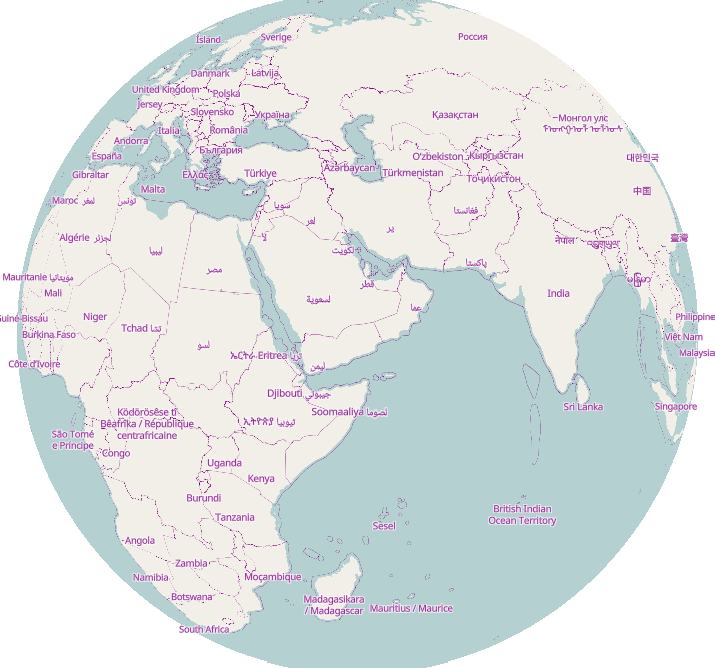
A globe view centred on the Indian Ocean

tl;dr: slightly less than an hour.

This was prompted initially by a forum comment (I can’t actually remember exactly where or by whom) that creating maps based on OSM was for “developers” and not “normal people” (not in those exact words), and by the thread here. The “slightly less than an hour” actually includes setting up a development environment from scratch on a new PC.

On that new PC I’ve already installed a text editor and a web server (“apache2”).

cd ~/src
git clone https://github.com/SomeoneElseOSM/SomeoneElse-vector-web-display
git clone https://github.com/systemed/tilemaker

In the first of those repositories there are a selection of map styles, including one that uses the OSMF demo vector tiles. Let’s first test that that works:

See full entry

Location: 2,470, 17,690

(english translation by OpenAI/chatgpt)

RETEX: Tagging Choices for My Urban Recycling Trekking

Hesitations, discussions, collisions with other contributors, changes, hesitations… but convergence.

to be continued maybe:

  • journal entry (upcoming): Existential questions about my encounter with Panoramax

At first, tagging the operator since it’s the target of the trekking.

The operator is known here as GPSEO, or GPS\&O, or Grand Paris Seine and/& Oise… Which name to choose? Likewise, I encountered clothing containers from Le Relais or Emmaüs, and again, which names should be used?

my encounter with Wikidata

Thanks to the forum, I was guided towards Wikidata, which allows assigning a unique code to a large number of resources (companies, operators, municipalities, associations, widely known people, …).

Once the resource in question is given a Wikidata code, its Wikidata entry contains important data (name, website, Wikipedia reference, revenue, …) and thus allows all Wikipedia collaborative applications to access these elements in a common way. So it is enough to reference the operator’s Wikidata code in OSM tags to identify it uniquely and stably. From this code, it’s easy to retrieve the operator’s website, its Wikipedia reference, and other useful information without having to explicitly add them as OSM tags (which would require updating OSM every time the data changes).

A single concession seems necessary: I retrieved the operator’s official name from its Wikidata entry and added it as an OSM tag for readability.

And therefore:

operator=GRAND PARIS SEINE ET OISE operator:wikidata=Q19945071

Tags deliberately omitted because the information is evolving and can be found in the operator’s Wikidata article:

operator:wikipedia, operator:website, operator:short

And similarly:

operator=Emmaüs operator:wikidata=Q989437

operator=Le Relais operator:wikidata=Q16654240

ref or operator:ref

See full entry

RETEX : Les choix de tag pour mon trekking urbain recyclage

Hésitations, discussions, collisions avec d’autres contributeurs, changements, hésitations, … mais convergence.

à suivre peut-être :

  • entrée de journal (à venir) : Questions existentielles sur ma rencontre avec panoramax

Au départ, taguer l’opérateur puisque c’est la cible du trekking.

L’opérateur est connu ici sous le nom GPSEO, ou GPS&O, ou Grand Paris Seine et/& Oise …. . Quel nom retenir ?
De même, j’ai rencontré des conteneurs à vêtements du Relais ou de Emmaüs et, là encore, quels noms retenir ?

ma rencontre avec wikidata

Grâce au forum, j’ai sur ce sujet été orienté vers wikidata qui permet d’affecter un code unique à un grand nombre de ressources (sociétés, opérateurs, communes, groupements, personnage à portée large, …).

Une fois la ressource concernée dotée d’un code wikidata, son entrée wikidata contient les données importantes (nom, site web, référence wikipedia, chiffre d’affaires, … ) et permet ainsi à toutes les applications de la sphère collaborative wikipedia d’accéder de façon commune à ces éléments. Il suffit donc de référencer le code wikidata de l’opérateur dans les étiquettes OSM pour identifier celui-ci de façon unique et stable. A partir de ce code, il sera aisé de retrouver le site WEB de l’opérateur, sa référence wikipedia et autres renseignements utiles sans avoir à les mettre comme étiquettes explicites de OSM (ce qui obligerait à mettre à jour OSM chaque fois que ces données changent).

Une seule concession nécessaire, me semble-t-il : j’ai récupéré le nom officiel de l’opérateur dans ses données wikidata et l’ai mis en étiquette OSM pour plus de lisibilité.

Et donc :

operator=GRAND PARIS SEINE ET OISE
operator:wikidata=Q19945071

étiquettes omises volontairement car les informations sont évolutives et peuvent être trouvées dans l’article wikidata de l’opérateur :

operator:wikipedia, operator:website, operator:short

Et, de même :

See full entry

Posted by WilburSunflower on 21 August 2025 in English.

Greetings whoever is reading this, including my future self who may be the only audience.

I was invited earlier this year to take part in an exhibit called [“Compass Roses”] (https://www.compassroses.art/), which will be on view at Opalka Gallery in Albany, NY this Fall.

“Compass Roses: Maps by Artists is a national artwork co-curated by Nadine Wasserman and Renee Piechocki. The project offers a selection of maps created by visual, literary, and performing artists. “

I chose to make a map of Gun Violence Memorials in Albany. I was inspired by a memorial called Chyna’s World, a mural in memory of an 18-year old high school senior named Chyna Forney. Chyna was killed in crossfire in an incident when her boyfriend fired over 30 rounds at another man. The mural is painted at the location where the incident took place. After seeing this mural, I wondered if there were others like it.

I have been aware of the problem of gun violence for this entire century. I have perceived it from three aspects that touch but are distinct: school shootings, the eclipse of streetfighting, and police murder. I might say more about those three in this diary over the next few months, but for now I will just say that these have been buried the past five years by the sheer numbers of tragic gun deaths in this country, in my city, in my neighborhood, on my street. There were 10 shootings on my street when the world broke down during New York Pause, from April 27 2020 a few weeks into the pandemic through December 19, 2021. The nadir was the late night murder of 15-year old Destiny Greene, on a magical little street called Wilbur. I remembered the temporary monument that Destiny’s family had set up on Wilbur Street, and the attempts by some neighbors to set up a permanent memorial for shooting victims.

See full entry

Location: Mansion District, City of Albany, Albany County, New York, 12223, United States
Posted by pnorman on 20 August 2025 in English.

Vector Tile styles require icons are served in a sprite sheet. This contains all of the icons in one file. Years ago there were a few options for these, none of them great. These days, there are three common options: spreet, @basemaps/sprites, and sprite-one. The first is written in Rust while the other two are written in Javascript.

All have the same basic functionality of turning a folder of SVGs into a json+png spritesheet, and doing so at multiple resolutions. Spreet has the additional option of de-duplicating icons. If two icons are identical it will only put one copy in the PNG and reference the same image twice.

I benchmarked all three options with two sets of sprites: all the SVGs from OpenStreetMap Carto, and the OpenStreetMap Americana icons. The former is 973 icons and the latter is 248 icons. These are larger than a typical set of icons but are a good test.

  Test spreet sprite-one @basemaps/sprites
osm-carto SVGs @1x pixels 4194304 4078074 8339456
osm-carto SVGs @1x bytes 513159 763531 837792
osm-carto SVGs @1x bytes after oxipng 474750 649894 706845
osm-carto SVGs @2x bytes 1442588 2176457 2411489
osm-carto SVGs @2x bytes after oxipng 1325707 1896784 2088729
osm-americana @1x pixels 128265 122400 151760
osm-americana @1x bytes 75749 91870 92066
osm-americana @1x bytes after oxipng 75497 84986 85828
osm-americana @2x bytes 136177 213876 210650
osm-americana @2x bytes after oxipng 132462 197687 194950

See full entry

Tiens , puisque je ne savais pas ou garder les liens vers certaines de mes photos 360° , je vais les mettre ici:

Et puis il y a les sites d’escalade, certains sites sont jolis , et d’autres moins, et n’ont peut être que d’intérêts pour les grimpeurs. :

I’m importing boundaries in Croatia, and I’m almost done. So I wanted to describe my process so that someone else maybe doesn’t have to rediscover this process. Maybe there is a better one, but I didn’t find it.

Croatia in OpenStreetMap had admin_level=7 borders imported, but the borders were not precise. So my job was to import admin_level=8 into these. I had the data in .osm format, and a license that is compatible. I wanted to keep the history of the old boundaries, so deleting everything and just copying inside wasn’t a choice.

First we need JOSM, and some experience with it. We turn on the Expert Mode in View. We need to install the plugin “utilsplugin2”. Then we go to Map Paint Styles in Preferences, and turn on the “Admin Boundaries” style.

So the process goes like this. In JOSM I open the .osm file with all the admin_level=8 boundaries. Then I download the area where I intend to work, but I use “Download from Overpass API” feature. In it I add the next Overpass query:

[out:xml][timeout:90][bbox:{{bbox}}];
(
relation["boundary"="administrative"];
)-> .adminrelations;
(  .adminrelations;
  way(r);
) -> .ways;
(
  node(w.ways);
)-> .nodes;

way(bn.nodes);
(._;<;); (._;>;);
out meta;

What this query does is it downloads all the boundary relations, and all the ways that are connected to them.

1. Disconnecting

Next step I did was to disconnect all the roads, forests, rivers and anything that is not a boundary from the existing boundaries. I upload that, and later download a cleaner situation.

2. Splitting

See full entry