 OpenStreetMap

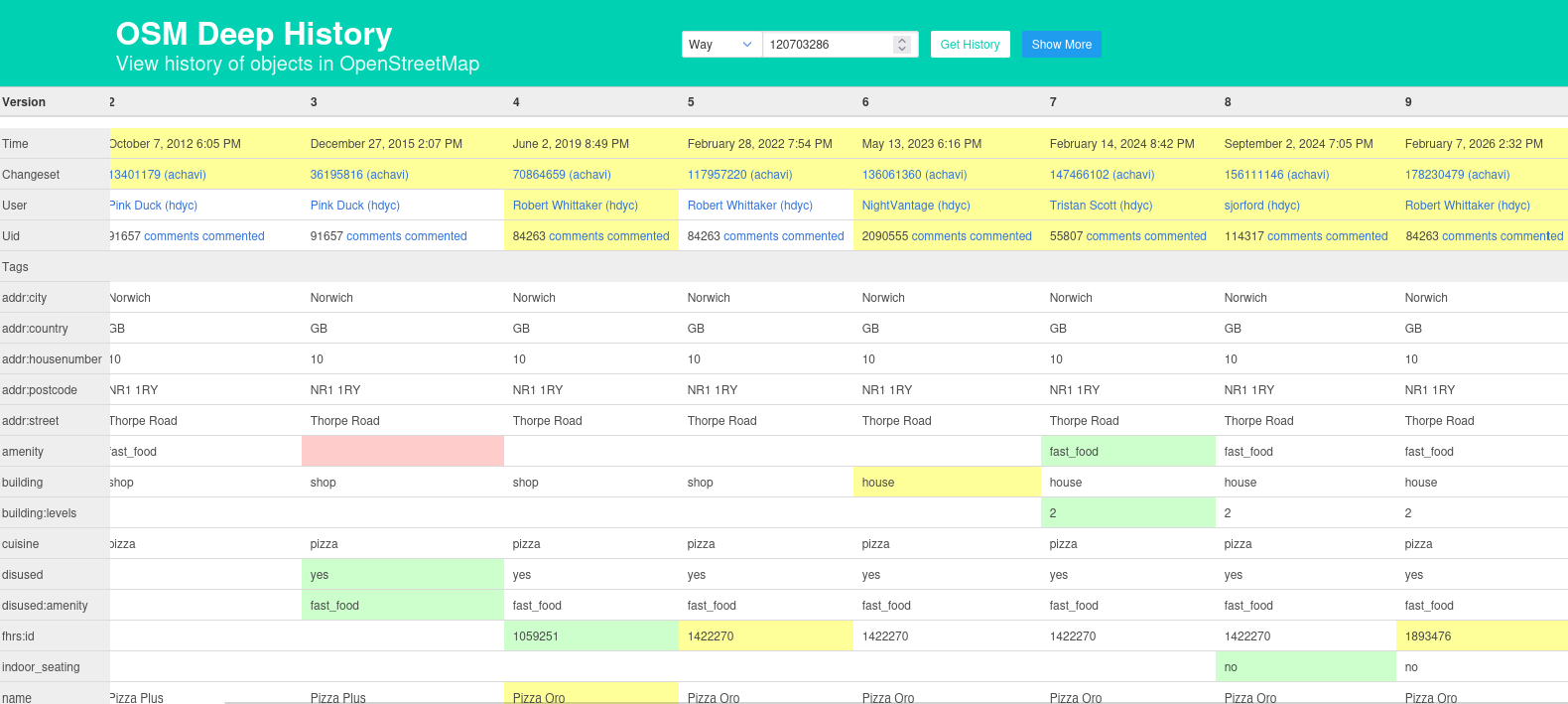
Generally speaking, Lifecycle Prefixes mean that when something is no longer in use, a tag such as amenity gets changed to disused:amenity. That should be straightforward, but sometimes disused=yes creeps in.
This example overpass query for nwr["amenity"="fast_food"]["disused"="yes"]({{bbox}}) finds a couple of examples. In these cases we can have a look at the tag history and (as seen in the picture at the top) notice that the FHRS ID changed recently, and the disused=yes actually corresponded to the name of a different business on the same site (in fact that that one has the full set of such tags: ["amenity"="fast_food"], ["disused:amenity"="fast_food"] (which don’t make sense together) and ["disused"="yes"]. In these cases you can often look through the tag history and see what the current status is supposed to be; if the last changeset comment was “this has now closed” it’s fairly obvious.
So does disused=yes always mean that someone has forgotten to change something to a lifecycle prefixed version? Well, maybe not. As an example, what about this former quarry? It’s not used as a quarry any more, but it is still a very big hole in the ground, so it makes sense to show it as such. Maps that I create distinguish between operational quarries
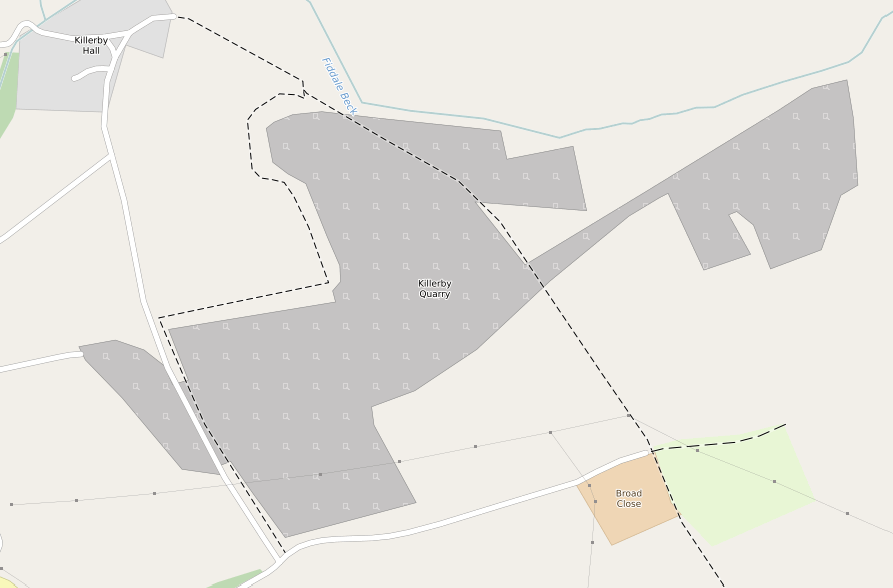
and historical ones
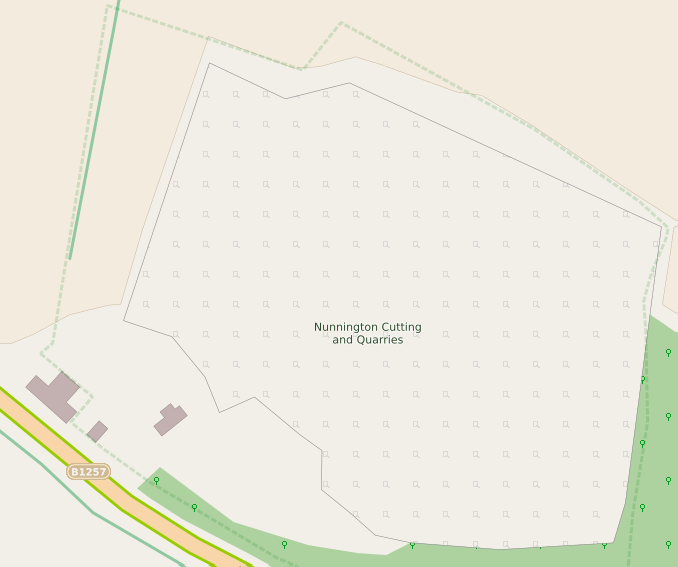
so including disused=yes in the latter category was straightforward.
What else might disused-yes occur with?
Quite a lot of the landuses don’t need any change at all. For example landuse=brownfield; disused=yes is something that people have tagged, and landuse=grass; disused=yes is also around; it usually means that something else (perhaps no longer tagged!) is disused.
Discussion
Comment from Janjko on 10 May 2026 at 10:31
Recently I needed disused=yes for a building=apartments. It’s in a bad state, but it could be fixed and returned to function. disused:building=apartments isn’t good because it is an apartment building, just empty. building:use=disused came to mind, but it’s not popular, 163 uses.
So the rule should be something like, if something isn’t used, is it still that in OSM? If a restaurant isn’t used, it isn’t a restaurant (although it might be open and operational within a day). An apartment building and quarry stay those things if not used.
Highways have acces=no which is similar to disused=yes.
Comment from stevea on 17 May 2026 at 22:49
In the (narrow, declared / defined) context of railway=disused, this means something specific: a “section of railway which is no longer used but where the track and infrastructure remain in place.” So, our wiki for that tag is correct, though do know that the history of lifecycle prefixes has been spicy, including and maybe especially railway values (even more so are railway=abandoned vs. razed, demolished… these are another matter altogether beyond disused, but only by a step or two).
I’ve seen disused=yes on amenity=fountain (and toilets, too, I think) experiencing plumbing repairs, so there is that usage, too. This can be extended to many things besides fountains and be semantically true, a taginfo search can be informative / revealing.
Though, exactly what “straightforward” means might be variable. Lifecycles are a real thing we might map well and even better, yet they are not simple and differ with different things. Rail is one of them that has its own syntax (still a bit fuzzy when you get out to …abandoned / demolished / razed… but that is the edge of disused).
Comment from chris_debian on 18 May 2026 at 18:01
Interesting post, and the quarry example really illustrates the point well. The physical feature persists even when the function has ended, which is quite different from a closed restaurant.
Janjko’s apartment building example points at the same underlying principle: the lifecycle prefix system works well where the thing genuinely ceases to exist as that thing (a closed restaurant is no longer a restaurant), but becomes awkward where the form remains while only the use has changed. In those cases
disused=yesas a modifier feels more honest than prefixing the primary tag.One dimension I don’t think has been fully explored in the comments is reversibility.
disused=yesseems to carry an implicit sense that something could return to use (the empty flat, the fountain awaiting repair), whereasdisused:amenity=*implies something more permanent. Whether that distinction is intentional or just emergent from mapper habit is probably worth documenting somewhere.Thanks,
Chris